Twelve Archetypes
The Jungian story you are living
Free, no account needed.

Every life tells a story, and some stories feel more like ours than others. This test explores twelve archetypes: recurring characters found in myths, novels, films and dreams across cultures, each with its own longing, fear, gift and shadow.
You will rate statements about what drives you and choose between stories, objects and roles. Answer from your real motivations rather than your ideals, and think of your life as a whole rather than one role in it. Everyone carries all twelve; the question is which ones are most alive in you now.
What it measures
Innocent
The longing for goodness, simplicity and safety, and the faith that things can turn out well.
Sage
The search for truth and understanding, and the fear of being fooled.
Explorer
The hunger for freedom, discovery and an authentic life found on your own terms.
Rebel
The urge to break rules that do not serve and to overturn what is not working.
Magician
The desire to understand how things really work, and to use that understanding to transform them.
Hero
The drive to prove your worth through courage, effort and the mastery of hard challenges.
Lover
The desire for intimacy, passion and beauty, and the fear of being unwanted.
Jester
The wish to live in the moment, enjoy life and lighten the world with humor.
Everyperson
The longing to belong, to be accepted and to be one of the people, without pretense.
Caregiver
The impulse to protect, nurture and help others, and the fear of becoming selfish.
Ruler
The drive to create order, take responsibility and steward a stable, prosperous world.
Creator
The need to make things of enduring value and to bring an inner vision into form.
Possible results
 The Innocent
Faith in goodness, and the courage to keep it.
 The Everyperson
Belonging, realism and the dignity of ordinary life.
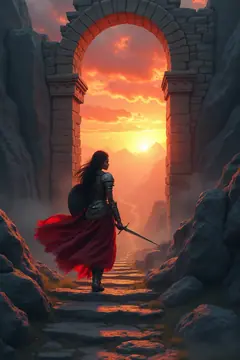 The Hero
Courage proven where it counts.
 The Caregiver
Compassion that shelters and strengthens others.
 The Explorer
Freedom, discovery and the search for an authentic life.
 The Rebel
The fire that clears away what no longer serves.
 The Lover
Passion, beauty and the courage to be close.
 The Creator
Imagination given a form that outlasts you.
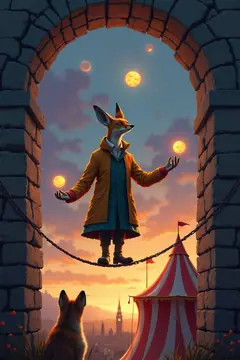 The Jester
Joy, wit and the freedom of the present moment.
 The Sage
The patient hunger to understand what is true.
 The Magician
Vision, transformation and the art of making it real.
 The Ruler
Order, responsibility and the power to steward well.
About this test
The word archetype comes from the Greek for “original pattern”. Carl Jung used it for the universal images and characters that recur in myths, dreams and stories everywhere: the hero, the wise elder, the trickster, the great mother and many more. Jung never fixed a definitive list. The twelve used here go back to the scholar Carol S. Pearson, who traced twelve archetypes through the stages of the hero's journey in Awakening the Heroes Within (1991), several of them under other names (Orphan, Warrior, Seeker, Destroyer, Fool). Her later book with Margaret Mark, The Hero and the Outlaw (2001), gave the set the names most used today, including the Regular Guy/Gal and the Outlaw (here called the Everyperson and the Rebel), and sorted them by four basic motivations: independence and fulfillment, risk and mastery, belonging and enjoyment, stability and control.
This test scores each archetype separately, from statements about your desires and fears and from forced choices between stories, objects and roles. Your result is the archetype you express most strongly, but the runners-up and your strongest orientation matter as much: most people live a blend, and the archetypes most awake in us shift across life, with circumstances and with growth.
An honest caveat: this is a storytelling framework, rich for reflection, writing and creative work, not a validated psychological measure. The items are original and are not taken from any commercial archetype inventory. Scores are relative to the range of possible answers, not to population norms. Treat the result as a mirror and a prompt: which story are you living, and which would you like to live next?
References
- Jung, C. G. (1959; 2nd ed. 1968). The Archetypes and the Collective Unconscious. Collected Works, Vol. 9, Part 1. Princeton University Press.
- Pearson, C. S. (1991). Awakening the Heroes Within: Twelve Archetypes to Help Us Find Ourselves and Transform Our World. HarperCollins.
- Mark, M. & Pearson, C. S. (2001). The Hero and the Outlaw: Building Extraordinary Brands Through the Power of Archetypes. McGraw-Hill.
- Campbell, J. (1949). The Hero with a Thousand Faces. Pantheon Books.
For self-reflection and curiosity, not diagnosis. Scores describe how you answered, relative to the possible range; they are not compared with population norms.
Twelve Archetypes
About 11 minutes · 82 questions
More tests in this area
- Sixteen Types
The Jungian four-letter type, MBTI-style
72 questions · About 9 minutes
- Enneagram
Nine types, nine core motivations
95 questions · About 13 minutes
- The Four Temperaments
Sanguine, Choleric, Melancholic or Phlegmatic?
28 questions · About 3 minutes
- Cognitive Functions
The eight Jungian functions behind the four letters
64 questions · About 9 minutes