Highly Sensitive Person
Orchid, tulip or dandelion?
Free, no account needed.
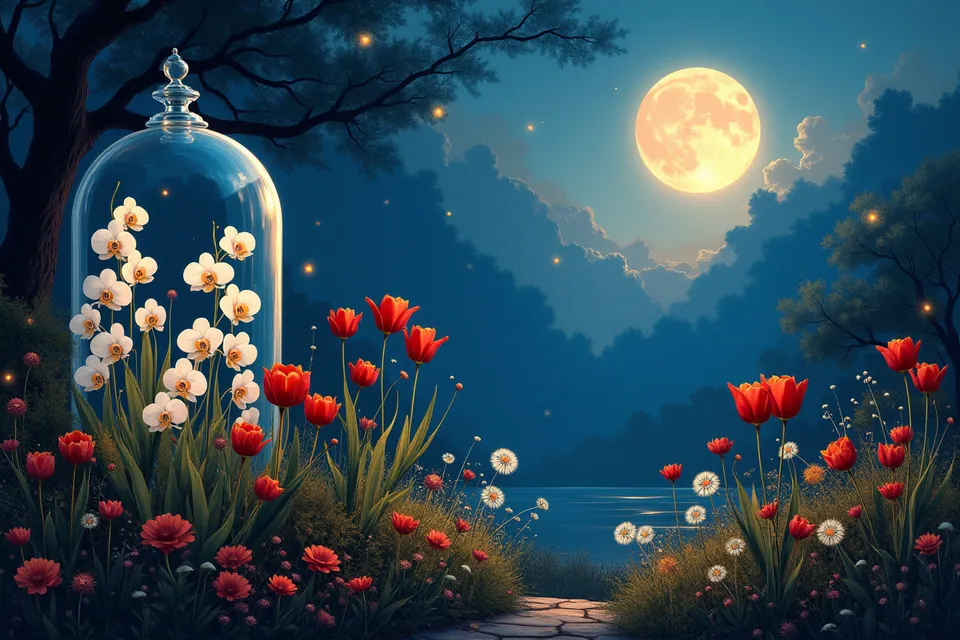
About a third of people process the world more deeply than the rest: they notice subtleties, are moved by beauty, and feel overstimulated sooner. Psychologists call this sensory processing sensitivity. It is a temperament trait, found in many species, and neither a flaw nor a disorder.
Rate each statement for how well it describes you in everyday life. Think of typical weeks rather than unusually good or bad ones.
What it measures
Overall sensitivity
Steady and hardy ↔ Highly sensitive
How deeply and intensely you process what you experience, across all three facets.
Steady and hardy: You take the world in at a comfortable volume and stay steady in busy, noisy or changing conditions.
Highly sensitive: You take the world in at a high volume: rich and moving, but quick to overflow.
Ease of excitation
How quickly demands, pressure, other people's moods and change overwhelm you.
Low: Pressure and busy days rarely knock you off balance.
High: Too much at once floods you quickly, and you need time to settle afterwards.
Aesthetic sensitivity
How deeply you are moved by beauty, art, nature and subtle details, and how rich your inner life is.
Low: You enjoy beauty without being swept away by it, and you focus on what is in front of you.
High: Music, nature and fine details reach you deeply; you notice what others walk past.
Low sensory threshold
How easily loud noise, bright light, strong smells, rough textures and bodily states like hunger affect you.
Low: Your senses have a high threshold: noise, light and discomfort rarely bother you.
High: Your senses are finely tuned: small irritations of sound, light or texture register strongly.
Possible results
 The OrchidHigh sensitivity
Tuned to a finer frequency: wilts in harshness, blooms magnificently in care.

About this test
The psychologist Elaine Aron and her husband Arthur Aron introduced the concept of the highly sensitive person in 1997, describing a temperament trait whose core is deeper processing of information; Elaine Aron later summed up its signs as depth of processing, ease of overstimulation, emotional reactivity and empathy, and sensitivity to subtle stimuli. Later analyses of their questionnaire, starting with Smolewska, McCabe and Woody (2006), found three facets that this test measures: ease of excitation (being quickly overwhelmed by internal and external demands), aesthetic sensitivity (being deeply moved by art, nature and detail) and low sensory threshold (being bothered by noise, light, textures and smells).
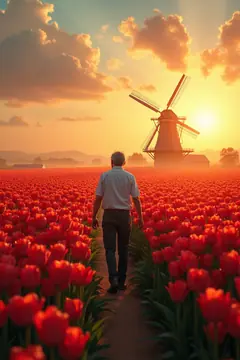
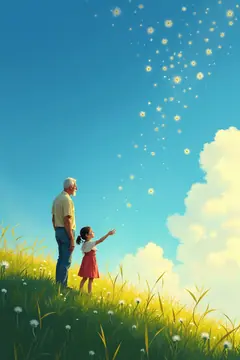
Research on "differential susceptibility" (Jay Belsky and Michael Pluess) and "biological sensitivity to context" (Thomas Boyce and Bruce Ellis) suggests that sensitive people are not simply more vulnerable: they are more responsive to their environment for better and for worse. In harsh conditions they struggle more, but in supportive ones they flourish more than others. Boyce called them orchids, in contrast to hardy dandelions, and Lionetti and colleagues (2018) found a large middle group they named tulips.
This test scores each facet and an overall sensitivity score relative to the range of possible answers, not against population norms. It is a self-reflection tool, not a clinical instrument; high sensitivity overlaps with, but is distinct from, anxiety, introversion and sensory processing difficulties.
References
- Aron, E. N. & Aron, A. (1997). Sensory-processing sensitivity and its relation to introversion and emotionality. Journal of Personality and Social Psychology, 73(2), 345-368.
- Smolewska, K. A., McCabe, S. B. & Woody, E. Z. (2006). A psychometric evaluation of the Highly Sensitive Person Scale: The components of sensory-processing sensitivity and their relation to the BIS/BAS and "Big Five". Personality and Individual Differences, 40(6), 1269-1279.
- Lionetti, F. et al. (2018). Dandelions, tulips and orchids: evidence for the existence of low-sensitive, medium-sensitive and high-sensitive individuals. Translational Psychiatry, 8, 24.
- Boyce, W. T. (2019). The Orchid and the Dandelion. Knopf.
- Belsky, J. & Pluess, M. (2009). Beyond diathesis stress: Differential susceptibility to environmental influences. Psychological Bulletin, 135(6), 885-908.
- Pluess, M. (2015). Individual differences in environmental sensitivity. Child Development Perspectives, 9(3), 138-143.
For self-reflection and curiosity, not diagnosis. Scores describe how you answered, relative to the possible range; they are not compared with population norms.
Highly Sensitive Person
About 3 minutes · 29 questions
More tests in this area
- The Big Five
OCEAN: the most researched model of personality
80 questions · About 10 minutes
- Character Strengths
Your signature strengths among the 24 virtues of character
96 questions · About 11 minutes
- Light & Dark Triad
Strategy, ego and edge... and their light counterparts
46 questions · About 6 minutes
- Emotional Intelligence
Read, manage and use emotions, yours and others'
42 questions · About 7 minutes
- Humor Style
Affiliative, self-enhancing, aggressive or self-defeating?
32 questions · About 5 minutes
- Chronotype
Lark, owl or something in between?
25 questions · About 4 minutes